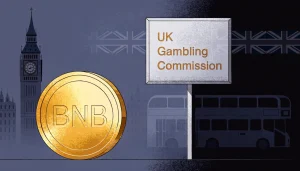
This guide explains what a TRON payment option can show, what it cannot verify, and why Great Britain licensing remains a separate question.

A casino’s reference to TRON or TRX does not establish that it is authorised to offer gambling in Great Britain. The relevant distinction is between a site’s description of itself and the regulatory permission required to provide remote gambling to people in the British market. A cryptocurrency label, a games catalogue or a mobile-friendly design cannot replace that permission.
The UK Gambling Commission is the regulator for commercial gambling in Great Britain. Its remit covers remote gambling offered to consumers there, even when the operator’s equipment or business is based elsewhere. A company selling real-money gambling to customers in England, Scotland or Wales must hold the relevant Commission licence. The location of a website’s servers does not, by itself, move the service outside that requirement.
This is why “TRON casino” and “licensed casino” describe different things. The first may refer to a site’s branding, an advertised payment option or another feature. The second is a regulatory status that can be checked against the Commission’s public register. A site may use TRON in its name or describe itself as a TRX casino; neither statement demonstrates that it holds a UK operating licence.
The Gambling Act 2005 supplies the main legal framework for gambling in England, Wales and Scotland. It defines a casino by reference to an arrangement that gives people an opportunity to take part in casino games. For online services, the decisive issue is not whether the operator calls the product a casino, but whether it is providing remote gambling to consumers in Great Britain and has the permission required for that activity.
Northern Ireland is outside the territorial scope of the Gambling Act 2005, so the framework described here concerns Great Britain rather than every part of the United Kingdom. That distinction matters when a page uses “UK” broadly: licensing statements about Great Britain should not be treated as a complete account of the separate legal position in Northern Ireland.
There is also a direct conflict between cryptocurrency acceptance and UK licensing. Operators licensed in Great Britain are not permitted to accept cryptocurrency. A TRON casino therefore cannot be treated as a UK-licensed gambling service merely because it advertises access to British customers or presents itself as suitable for UK players. If a site accepts cryptocurrency for gambling, that feature does not fit the conditions imposed on a UK-licensed operator.
The practical test is the licence, not the wording around the currency. A logo, a claim of worldwide availability or a statement that a site welcomes British customers is not evidence of Commission authorisation. Equally, a company name that resembles a known brand does not prove that the specific gambling service is covered. The operating business and the remote casino service need to be considered in the context of the Commission’s licensing system.
The Commission issues operating licences to gambling businesses and personal licences to individuals who perform specified roles in the industry. For a player assessing whether a remote casino is authorised, the business’s operating licence is the relevant starting point. The public register allows the status to be checked directly; a licence claim copied onto a site’s own pages is not a substitute for that check.
This distinction also prevents a common category error. A site can be technically accessible from a British connection without being licensed to serve the market. Accessibility is not authorisation. Nor does the use of a blockchain or a digital asset change the nature of the underlying activity: where the service offers casino gambling remotely to consumers in Great Britain, the licensing requirement still applies.
The words “best TRON casino” can obscure that first and more consequential question. Comparisons of presentation or features do not establish that an operator is permitted to offer gambling in Great Britain. Before any commercial claim about a TRX casino can carry weight for a British audience, its regulatory status must be considered separately. A casino can describe a product in polished terms; only the applicable licence establishes whether its remote gambling service is authorised here.
The boundary is therefore narrow but clear: mentioning TRON does not create a special category exempt from gambling regulation, and a UK licence cannot be inferred from a site’s currency options. For Great Britain, remote casino gambling offered to consumers requires the relevant UK Gambling Commission permission, while licensed operators cannot accept cryptocurrency. The two claims—British authorisation and cryptocurrency acceptance—cannot simply be combined as if they were compatible features.
Licensing Conflict
Operators licensed in Great Britain are prohibited from accepting cryptocurrency, meaning a TRON casino cannot be a UK-licensed gambling service.
A TRON label does not, by itself, identify a slot game. TRON and TRX refer to the cryptocurrency and its network; a slot is a separate product with its own title, rules, provider and operating conditions. Those distinctions matter because a payment label cannot establish what games a casino offers, how a particular game works or whether a slot is available to players in Great Britain.
The practical test for a slot is its own presentation and rules, not an association made elsewhere on a casino page. A game title, provider name and paytable should be identifiable before any claims about features or returns are treated as meaningful. A reference to TRON alongside casino content is not evidence that a slot is TRON-themed, that it runs on the TRON network or that its results are recorded on a blockchain. Those are different claims and require separate support.
This also limits what can responsibly be said about TRON slots in the UK. A general reference to TRX cannot support a description of a particular game, its volatility, return to player or bonus features. Such details belong to the individual game and cannot be inferred from the currency a casino mentions. A name that sounds related to TRON is not enough to establish a connection.
In Great Britain, online slots are subject to specific rules on stakes and play. For customers aged 25 and over, the maximum stake is £5 per game cycle. For those aged 18 to 24, it is £2 per game cycle. The £5 limit for adults came into effect on 9 April 2025; the lower limit continues to apply to younger adults. These are stake caps, not suggested spending amounts or measures of a slot’s likely return.
A game cycle is the relevant unit for applying the stake limit. The limit concerns the amount staked in that cycle, rather than the size of a possible win. A large displayed prize does not change the permitted stake, and a low stake does not establish that a game is low risk. The financial result still depends on the rules and outcome of play.
Online slot autoplay is banned in Britain. Each spin must also last at least 2.5 seconds. These requirements affect how a slot can be played: spins cannot be set to run automatically, and the minimum duration applies to each one. A presentation that suggests uninterrupted automated spins would not describe play permitted under the British rules for online slots.
Age verification is required before an operator allows a customer to deposit money into a gambling account. That check is relevant to access to real-money play, but it does not certify a game’s theme, quality or suitability. Nor does a game’s availability on a site establish that every claim made about it is accurate.
A useful game description separates observable details from interpretation. The title and provider identify the product. The rules explain how the game operates; the paytable describes winning combinations and prizes. Where a return-to-player figure is displayed, it is a theoretical measure over extensive play, not a prediction of an individual session’s result. It should not be treated as a guaranteed return or as a measure of whether a slot is safe.
The same care applies to labels such as “TRON slot” or “TRX game”. A slot may be grouped under a casino’s cryptocurrency content without being a game about TRON. Conversely, a themed title would not prove that bets or outcomes use TRX. Theme, payment method and game technology are separate attributes. Combining them in one label can make an ordinary catalogue entry sound more specific than it is.
Terms such as “best” or “trusted” also need a defined basis. A game’s stake cap and spin rules are regulatory conditions, not rankings. A title cannot be judged superior merely because it appears beside cryptocurrency information, and a TRON reference does not establish that its rules or return are better than those of another slot. Without identifiable game-level details, comparisons of features or outcomes have no sound basis.
For a British audience, the clearest distinction is between what is established about online slots generally and what is claimed about an individual title. The stake limits, autoplay ban and minimum spin duration apply to online slots in Britain. They do not verify a TRON connection, identify a TRX-specific catalogue or supply a basis for describing the performance of a particular game. A precise game name and its published rules are needed before those product-level claims can be assessed.
A casino’s mention of TRON does not, by itself, explain how a TRX payment would work. Deposit and withdrawal terms depend on the particular operator and must be read as separate conditions. A wallet label is not a payment specification: it does not set the accepted network, any minimum or fee, how a deposit is credited, or where a withdrawal can be sent.
For a deposit, the relevant details are the payment method the operator actually supports and the instructions shown at checkout. A comparison would need to establish whether TRX is accepted directly, which network is specified, whether the displayed address and network match, and what the operator requires before crediting the account. Without those details, claims about a deposit being instant, cheap or reliably credited cannot be treated as established. A mismatch between the selected network and the one specified by the operator can also make a payment difficult to recover; the label “TRON” alone does not resolve that risk.
Withdrawals require their own assessment. The terms should make clear whether winnings can be paid in TRX, whether the destination must be a wallet controlled by the account holder, and whether the operator applies a minimum, fee, review or processing condition. Deposit support does not prove withdrawal support: an operator may describe a coin as a funding option without setting out the route for cashing out in the same currency. Nor does a general statement that a site accepts crypto establish a TRX withdrawal time.
These are practical distinctions, not fine print in the accounting sense. The amount requested, the amount credited, and the amount ultimately received may differ if fees or conversion apply. Any comparison that does not specify the relevant currency and conditions cannot support a net-return calculation. No TRON-specific processing time, confirmation requirement, fee or payout threshold should be inferred from Bitcoin Cash descriptions. Those concern a different cryptocurrency and cannot supply the missing terms for TRX.
There is also a regulatory limit on what a UK-facing TRON payment claim can mean. UK-licensed operators are prohibited from accepting cryptocurrency. Remote gambling offered to consumers in Great Britain requires a Gambling Commission licence regardless of where an operator’s equipment is located. A TRX deposit option therefore cannot be treated as a feature of a UKGC-licensed casino. A site’s payment page and its licensing status are separate matters; one does not establish the other.
For a useful comparison, payment claims need to be checked against the operator’s current terms and cashier instructions, not reduced to a “TRON accepted” label. The key questions are whether the stated asset is TRX, what deposit and withdrawal conditions apply, and whether the operator holds the licence required to serve Great Britain. If those elements are not stated clearly, the payment route cannot be assessed as a complete deposit-to-withdrawal process. A TRON wallet may be relevant to a transaction, but it does not establish the casino’s terms, its permission to serve the British market, or the amount that will arrive after a withdrawal.
A comparison of TRON casinos for Great Britain needs to separate two questions: what a site says about TRX, and whether its gambling operation falls within the British regulatory system. A payment label, game catalogue or promotional offer cannot answer the second question. The relevant starting point is the operator’s status under the UK Gambling Commission.
The Commission oversees commercial gambling in Great Britain, including online casino activity, and is the sole regulator for that market. Its remit over remote gambling depends on whether services are offered to consumers in Great Britain, not on where a company keeps the equipment that runs its site. A casino cannot establish that it is outside the rules simply by locating its servers or business elsewhere.
That makes the operator, rather than the TRON network, the proper unit of comparison. The Commission grants operating licences to gambling businesses and personal licences to individuals who carry out specified roles in the industry. These are different permissions: a personal licence does not replace the business’s operating licence, and a cryptocurrency feature does not substitute for either. Comparisons that treat a wallet option as evidence of regulatory status are measuring the wrong thing.
A sound comparison first identifies the business behind the casino and checks whether its operating permission corresponds to the gambling it offers. It then assesses any TRX-related statement separately. For instance, a site might describe TRON as a supported currency, but that statement concerns its own product claims; it does not establish that the operator is authorised to serve the British market.
The distinction matters because the same words can describe very different arrangements. “UK” may refer to a site’s intended audience, its available currency, or its regulatory position. Only the last of those is answered by a relevant operating licence. Likewise, a casino’s use of TRX says nothing by itself about which company is responsible for the gambling service.
A comparison should therefore make its criteria explicit. Regulatory status belongs in one category; payment features and other product details belong in another. If a listing places them together without showing what each claim proves, the result can look more conclusive than the underlying information warrants. A neat table is not a regulatory instrument.
The geographic scope also needs precision. The Commission’s role described here concerns Great Britain. A reference to a UK-facing website should not blur that scope or imply that one statement about a token determines the rules everywhere in the United Kingdom. The comparison should state what it is assessing and avoid extending a claim beyond its stated jurisdiction.
For a TRON casino comparison in Great Britain, the useful test is not whether a site uses TRX language, but whether its operator can be assessed against the regulator responsible for commercial gambling in that market. That provides a common basis for reading different casino claims without turning a payment feature into proof of authorisation. No ranking follows from the currency label alone: the comparison has to keep regulatory permission and product description as separate entries, each supported by evidence of its own.
A casino can advertise TRON or TRX as a payment option, but that claim does not establish that the operator is authorised to serve customers in Great Britain. The two questions are separate: whether a site says it accepts the cryptocurrency, and whether it holds the licence required to offer remote gambling to the British market.
For UK-licensed operators, the distinction is decisive. They are prohibited from accepting cryptocurrency. A site cannot turn a TRON payment into a permitted one by describing it as a wallet transfer, a blockchain feature or an alternative checkout route. If gambling funds are accepted in TRX, that is not a cryptocurrency payment method available to a UK-licensed casino.
The wording on a website is therefore not a reliable indicator of regulatory status. “TRON casino”, “TRX accepted” or a payment logo may describe what an operator claims to offer. None of those labels proves that the operator is licensed by the UK Gambling Commission, or that its gambling service complies with British requirements. A polished app does not alter the position either.
The same applies to a casino presented as a decentralised application, or dApp. Running through a blockchain does not, by itself, remove the gambling activity from the rules that apply to remote services offered to people in Great Britain. The technical format and the payment token do not substitute for the required operating licence.
This matters when interpreting claims about a TRON casino app or a blockchain casino available to UK players. “Available” can mean that a page loads or that an account can be opened; it does not mean that the service is authorised for the British market. Similarly, a promotion such as TRON casino free spins says something about an advertised offer, not about the operator’s licence or the legality of its service for British customers.
A site claiming to accept TRX should therefore be assessed on two separate lines. First, what exactly does the claim cover: a direct TRX payment, a third-party conversion, or simply a cryptocurrency reference in promotional material? Second, is the gambling operator licensed to serve Great Britain? The first answer cannot supply the second. For a UK-licensed operator, accepting cryptocurrency is not permitted; for an offshore casino, a TRON acceptance claim does not make it UK-licensed.
An offshore casino operates outside the UKGC regulatory system. Using one does not give access to the UKGC regulatory safety net, UKGC dispute resolution or GamStop integration. Those protections are not created by a familiar interface, a downloadable app or a token transfer. The difference is practical: if a dispute arises, the UKGC route available for licensed gambling is not available for an offshore service.
Accordingly, “casinos accepting TRON in the UK” can describe sites that make the claim and are reachable from Britain, but it should not be read as a category of UK-licensed casinos taking TRX. Acceptance is a payment assertion. A licence is regulatory authorisation. Treating the first as proof of the second confuses two separate conditions, and the cryptocurrency restriction makes that confusion especially costly.
When considering TRX casinos in the UK for 2026, payout speed is one practical detail to check alongside the terms that matter to you. This list provides a quick reference for the payout information available for each operator.
WinBeast
WinBeast lists a payout speed of 1–3 business days.
Revery Play
Revery Play lists a payout speed of 1–3 business days.
NightLuck
NightLuck lists a payout speed of 1–3 business days.
SlotoSport
SlotoSport lists a payout speed of 1–3 business days.
Chanze
Chanze lists a payout speed of 1–3 business days.
x3bet
x3bet lists a payout speed of 1–3 business days.
Jetsetspins
Jetsetspins lists a payout speed of 1–3 business days.
Dieselwin
Dieselwin lists a payout speed of 1–3 business days.
Amunbet
Amunbet lists a payout speed of 1–3 business days.
Zombillion
Zombillion lists a payout speed of 1–3 business days.
“Best” is a comparative claim, not a feature of a payment method. A casino does not become the best choice for British players simply because a page says it supports TRON, displays a favourable rating or offers a welcome promotion. A defensible ranking would need comparable, current evidence about the operators and the terms that apply to customers in Great Britain.
The first test is whether the operator is authorised to serve the market. Remote gambling businesses offering services to consumers in Great Britain must hold the relevant UK Gambling Commission licence, wherever their equipment is located. Online gambling is legal in the UK only through licensed and regulated sites. A TRX label does not change that standard. A licence claim should be checked against the Commission’s public register before any deposit; a logo or statement on an operator’s website is not an independent confirmation.
That check also sets the boundary of a meaningful “best” claim. An offshore casino may be accessible to a UK player, but accessibility is not equivalent to authorisation. Such a site operates outside the UKGC regulatory safety net. Its customers do not have access to UKGC dispute resolution or an approved alternative dispute resolution service, and the site does not provide GamStop integration. Those are practical differences, not minor omissions from a review score.
A reliable assessment would then compare evidence that can be checked rather than promotional language. Relevant points include whether the licence is current, what terms govern deposits and withdrawals, how complaints are handled, and what account controls are available. For a TRON-specific recommendation, the comparison would also need to establish that TRX is genuinely supported for the relevant account and that the stated conditions apply to British customers. A general cryptocurrency claim cannot answer those questions by itself.
Reviews can help identify questions, but a rating is not a substitute for the underlying terms. The score may combine game selection, design, bonuses and payment claims in a way that hides the details that determine the final outcome. If a review does not show how its criteria were checked, or whether the same standards were applied across operators, its ranking should be treated as an opinion rather than a measured comparison.
The same caution applies to descriptions of a “best TRON casino in the UK” or “top TRX casinos”. Without current, comparable operator-level evidence, naming a winner would imply a level of verification that the label alone cannot support. A sound ranking needs both a lawful basis for serving British customers and evidence for the specific TRX-related claims being compared. Otherwise, the word “best” is packaging; it does not establish the operator’s status, the payment terms or the protections available if something goes wrong.
A real-money offer has two separate values: the amount credited under its terms and the amount that can ultimately be withdrawn. A welcome bonus may increase the balance shown on screen, but it is not equivalent to cash available on demand. Wagering conditions, eligible games, expiry rules and withdrawal caps determine how much of that balance can become payable.
Since 19 December 2025, the Gambling Commission has capped wagering requirements on bonuses at ten times. This limit does not remove other conditions or guarantee a full withdrawal of the displayed balance.
For a TRON casino welcome offer, the currency label does not change that calculation. A bonus described in TRX still needs clear terms covering the qualifying deposit, wagering requirement, eligible play and maximum cashout. If any condition is unclear, the displayed bonus amount cannot be treated as a reliable estimate of the final return.
Bitcoin Cash bonus figures sometimes published for other casinos do not establish terms for TRON offers. They cannot be carried across to a different cryptocurrency or operator. Nor does a promotion establish that a site is authorised to offer gambling to customers in Great Britain. Those are separate questions: the bonus is a commercial condition; the licence determines whether the operator can legally serve the British market.
British rules also affect how licensed operators present and administer promotions. Since 19 December 2025, the Gambling Commission has capped wagering requirements on bonuses at ten times. That cap does not make the bonus cash, remove other conditions or guarantee that a player can withdraw the full displayed balance. The remaining terms still matter.
A no-deposit promotion should be assessed by the same distinction. A credit that requires no payment may still carry wagering conditions or a limit on withdrawals. The headline value alone says little about the amount payable after those conditions are met.
Real-money play also depends on account controls, not just an advertised offer. Licensed operators must verify a customer’s age before allowing deposits, prompt new customers to set a financial limit before their first deposit and provide accessible account-level limit controls. These requirements shape the conditions of play; they do not improve a bonus’s financial return.
The useful figure is therefore not the promotional balance but the amount that remains withdrawable after every applicable condition. If the terms do not allow that amount to be calculated, the headline offer is packaging, not a return.
TRON is a blockchain network, while TRX is its native cryptocurrency. In a casino context, the distinction matters because a payment made in TRX is still a cryptocurrency payment; using a particular network does not turn it into a conventional sterling transaction.
For UK-licensed gambling operators, the relevant rule is direct: they are prohibited from accepting cryptocurrency. That applies to TRX just as it applies to other cryptoassets. A casino cannot make a TRX deposit permissible for its British-licensed operation by describing it as a blockchain transfer, a token payment or a separate cashier option.
This limits what “TRON casino” can mean in a UK context. It may describe a site that promotes TRX gambling, but that label alone says nothing about whether the site is authorised to serve customers in Great Britain. The payment currency and the operator’s regulatory status are separate questions. A cryptocurrency logo or a TRX balance does not establish that an operator holds the relevant Gambling Commission licence.
The same distinction applies to claims about a casino being “top” or suitable for UK players. A ranking based on crypto availability would not resolve the regulatory issue: UK-licensed operators cannot accept crypto, so TRX support cannot serve as evidence of UKGC authorisation. Nor does the use of TRON alter the rules that apply to remote gambling offered to people in Great Britain.
The practical reading is therefore narrow. TRX may be presented as a casino currency by some sites, but it is not an accepted payment method for UK-licensed gambling. Any assessment of a TRON-branded offer has to keep the currency claim separate from the licence question. Treating the two as interchangeable would make a payment feature look like a regulatory credential; it is not one.
A “no-KYC” label suggests that a casino will let customers register and gamble without identity checks. For a TRON casino, that wording is not enough to establish what checks apply, when they occur or whether they can be required later. Claims about Bitcoin Cash casinos cannot fill that gap: a payment method does not prove that a TRON site follows the same account-verification process.
In Great Britain, an operator offering remote gambling to local customers must hold the relevant UK Gambling Commission licence, regardless of where its equipment is based. Licensed operators must verify a customer’s age before allowing a deposit. A promise of no checks cannot remove that requirement. The label therefore cannot be read as evidence that a UK-licensed casino will permit deposits without age verification.
An offshore casino may describe its registration process as requiring little information, but that claim does not establish that the operator has no further checks, or that the service is covered by UK rules. Offshore operators sit outside the UKGC regulatory system. Their customers do not have the UKGC regulatory safety net, UKGC dispute resolution or GamStop integration. Not having those protections is a material condition, not a footnote to a convenient sign-up process.
A “no-KYC TRON casino” claim should be treated as an unverified description unless the operator clearly explains the checks it performs and the circumstances in which it may request documents. Even a detailed statement from the operator does not turn an offshore site into a UK-licensed one. The relevant licence should be confirmed on the Gambling Commission’s public register before any deposit; a brand’s own wording is not a substitute for that record.
The practical distinction is straightforward: a site’s identity-check policy and its UK regulatory status are separate questions. The first concerns what the operator says it will ask for. The second determines whether the service is licensed to offer gambling to consumers in Great Britain.
A UK resident is not committing an offence simply by gambling with an offshore casino. That does not make the operator part of the British system. Remote gambling offered to consumers in Great Britain must be covered by a UK Gambling Commission licence; an offshore casino without one sits outside that framework.
For anyone considering TRON casino games from the UK, the distinction is practical, not semantic. A player at an offshore site has no UKGC regulatory safety net, no UKGC dispute resolution and no GamStop integration. The operator is not subject to the UKGC complaints route or the requirement to offer access to an approved alternative dispute resolution service. If a dispute concerns an account balance or a refused withdrawal, those protections are not available through the British regulator.
A site’s accessibility from the UK does not change its licensing status. Nor does the absence of criminal liability create the safeguards attached to a UK-licensed casino. The legal position of the player and the regulatory position of the operator are separate calculations.
Tax treatment is separate again. Gambling winnings are not subject to UK income tax or capital gains tax, regardless of whether they are received in pounds or cryptocurrency. That statement concerns the winnings themselves; it should not be read as a general ruling on every later transaction involving cryptoassets.
The relevant comparison for UK players is therefore not just whether a site accepts TRON or permits play. It is whether the operator holds the licence required to serve Great Britain, and which complaint and self-exclusion protections apply. An offshore option may be reachable, but reachability is not the same as UKGC-backed recourse.
Many use wallet-based deposits and minimal checks; some allow account creation with only an email address and password. However, BCH transactions are public, and deposits can often be traced back to a known exchange.
No UK-licensed casino currently accepts BCH, and UK-licensed operators are prohibited from accepting cryptocurrency.
It cannot be a UK-licensed operator while accepting cryptocurrency. A site’s accessibility to British players does not establish that it is licensed to serve them.
The UK does not criminalise individuals for gambling with offshore operators. But remote gambling offered to consumers in Great Britain requires a Gambling Commission licence, and licensed operators cannot accept cryptocurrency.
The UK does not criminalise individuals for gambling with offshore operators. However, a BCH-accepting casino cannot be UK-licensed, and remote gambling offered to consumers in Great Britain requires the relevant licence.
BC.Game and Stake have processed BCH cashouts within 10 minutes of a request, often in under five. Some casinos hold larger withdrawals for a management review, with thresholds varying from 0.5 BCH to 2 BCH equivalent.
No. No UK-licensed casino currently accepts Bitcoin Cash as a direct payment method.