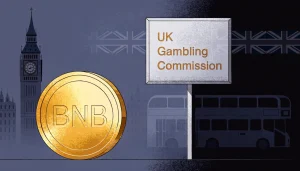
UK-licensed operators are not permitted to accept cryptocurrency, so an ADA option does not establish UK authorisation.

A casino that accepts Cardano (ADA) cannot be treated as a UK-licensed online casino. The dividing line is the payment method: operators holding a UK Gambling Commission licence are not permitted to accept cryptocurrency. A site may present ADA as a deposit option, but that does not make it part of the British licensing system.
The Gambling Commission oversees gambling activity in the United Kingdom, including online casino services. For remote gambling offered to consumers in Great Britain, its remit applies even when the operator’s equipment or business infrastructure is located elsewhere. Location therefore does not remove the licensing requirement for a business selling gambling to the British market.
The Commission grants operating licences to gambling businesses and personal licences to individuals working in relevant roles. These licences establish who is authorised to provide or participate in regulated commercial gambling in Great Britain. They are not interchangeable with an overseas licence, a payment-provider account or a statement on a casino website that it accepts British customers.
A UK-licensed casino cannot offer cryptocurrency deposits, including ADA. That rule means the terms “UK casino” and “Cardano casino” describe different things when the latter refers to a site taking ADA for real-money play. An operator cannot combine the UKGC licence framework with cryptocurrency acceptance as though both were available features of one licensed service.
This does not establish that every site advertising Cardano deposits is operating in the same way, or under the same overseas arrangements. It does establish that ADA acceptance is not a feature of a UKGC-licensed casino. A site claiming both UK licensing and direct ADA gambling payments would need its claim examined against the Commission’s public register and the actual payment terms; the two propositions do not fit the licensing rule.
The distinction also applies when a casino uses wording such as “UK players welcome”. Being accessible from Britain is not equivalent to being authorised to provide gambling to consumers there. The relevant question is whether the business holds the required UK Gambling Commission operating licence, not whether its website loads, its interface uses pounds, or its marketing mentions British customers.
An offshore casino operates outside the UKGC system if it does not hold the required British licence. An overseas authorisation does not substitute for a Commission licence to serve Great Britain’s market. The legal requirement is attached to the gambling service offered to British consumers, not simply to the country where the operator is incorporated or the servers are kept.
The UK rules distinguish the operator’s licensing obligations from the individual player’s position. Offshore gambling by individuals is not itself criminalised in the UK, but that does not turn an unlicensed casino into a UK-regulated service. The absence of a player offence is not the same thing as the presence of consumer protections.
An offshore player does not have the UKGC regulatory safety net. There is no access to UKGC dispute resolution or an approved Alternative Dispute Resolution route through the British licensing system, and the service does not have GamStop integration. Those differences matter if a withdrawal, account decision or complaint becomes contested: the usual UKGC route is not available merely because the customer is in Britain.
A Cardano online casino should therefore be assessed first by its regulatory status, not by the coin displayed in its cashier. If ADA is accepted for gambling, the operator is not doing so as a UKGC-licensed casino. If a site claims otherwise, the claim requires verification against the Commission’s register rather than reliance on promotional labels.
This boundary is narrower than a general judgement about whether a particular offshore site is reliable. It says what its licensing status cannot be: an offshore operator does not become equivalent to a UK-licensed casino because it accepts British registrations or offers a familiar range of games. Nor does an overseas licence extend the Commission’s complaint and self-exclusion arrangements to that service.
For real-money casino gambling in Great Britain, the licence is the central regulatory test. The Commission regulates the market and authorises businesses through operating licences; cryptocurrency acceptance sits outside the permitted payment model for those licensees. Accordingly, “Cardano casino” and “UK-licensed casino” are not interchangeable descriptions. Any comparison that treats them as such would collapse the main condition that determines which regulatory protections apply.
Licensing Boundary
UKGC-licensed casinos are prohibited from accepting cryptocurrency. Any site claiming both UK licensing and direct ADA payments should be verified against the Commission's public register.
“Best” is a conclusion that depends on comparable, verified terms. A casino accepting Cardano would not qualify as the best merely because it offers an ADA deposit option, advertises a large bonus or describes withdrawals as fast. Those claims need to be assessed against the conditions that determine what a player can deposit, wager and ultimately withdraw.
A sound comparison starts with the payment method itself. The deposit instructions should identify whether ADA is accepted directly, which network is supported, how the required amount is calculated and what happens if a transfer arrives under the stated amount. The withdrawal rules matter just as much: they should explain whether payouts can be made in ADA, how a request is processed and whether fees or conversion rates affect the amount received. A general claim that a casino supports cryptocurrency does not settle any of these points for Cardano.
The operator’s terms also need to match the advertised payment option. A cashier page may show a currency without clarifying whether it is available to every account, whether it applies to deposits and withdrawals, or whether extra conditions attach to its use. If those details are not consistent across the payment instructions, bonus rules and withdrawal policy, the apparent offer cannot be treated as a reliable comparison point.
Cardano casino bonuses are not comparable by headline value alone. A deposit match, for instance, has a practical value only after its qualifying deposit, wagering requirement, eligible games, expiry, maximum stake and withdrawal restrictions are understood. A large advertised bonus can produce a smaller usable benefit if the conditions limit how it may be played or cashed out.
The calculation also depends on the player’s likely use of the offer. A bonus restricted to particular games may be worth less to someone who does not play them. A cap on withdrawals may limit the amount that can be retained, while a short expiry may leave insufficient time to complete the conditions. These are not minor footnotes: they determine the effective value of the promotion.
Comparisons should therefore place each offer’s complete terms side by side, rather than rank casinos by the largest figure in an advertisement. If one operator publishes clear conditions and another leaves material terms uncertain, treating the two bonuses as equivalent would hide an important difference. Uncertainty is not a bonus feature.
A ranked verdict needs a consistent basis. Payment access, fees, conversion rules, bonus conditions, withdrawal procedures and account restrictions all affect the result. Each operator would need to be assessed using the same criteria and current terms. Otherwise, a ranking may reflect whichever feature was easiest to find, not which offer represents better value.
The word “best” can also mean different things. One person may value a straightforward deposit and withdrawal process; another may care more about bonus restrictions or the ability to play without converting funds. A useful assessment states which factors it weighs and why. Without that method, a top position is an assertion rather than a conclusion supported by comparable terms.
The same applies to labels such as “best ADA casino” or “best Cardano casino in the UK”. Adding a location or currency to the phrase does not make the underlying comparison more precise. The relevant question remains whether the terms are verified, sufficiently complete and assessed on equal footing. A site’s own marketing cannot establish that it outranks alternatives.
A careful review can describe the conditions attached to a particular offer, where those conditions are clear. It can identify whether the payment instructions mention ADA, whether a promotion excludes certain payment methods, and whether withdrawal rules impose requirements relevant to the advertised offer. These are specific observations, not proof of overall quality.
A ranking requires more than isolated observations. It requires enough comparable information to distinguish a stronger offer from a weaker one, and a method for weighing trade-offs. A casino may have clearer payment rules but less attractive bonus conditions; another may advertise a larger promotion but impose tighter restrictions. There is no defensible single winner until those differences are established and evaluated consistently.
For that reason, no “best” Cardano casino verdict should be inferred from promotional language alone. The useful result is a transparent account of what the terms establish and where their limits lie. Where the conditions cannot be compared on equal terms, a ranked list would imply precision the underlying assessment does not have.
A comparison involving Cardano’s ADA needs payment evidence tied to ADA itself. Bitcoin Cash (BCH) is a different cryptocurrency, so a casino’s BCH deposit route, transaction record or withdrawal terms cannot establish that the same operator accepts ADA or handles it on the same conditions. Similarities between the assets do not make their payment arrangements interchangeable.
That distinction matters when evaluating claims about a Cardano casino. A page describing cryptocurrency payments may refer to BCH, Bitcoin or another asset without confirming an ADA option. The payment method needs to be identified precisely: a general statement that a site accepts crypto does not specify which coins it supports. Nor does evidence about one coin establish the availability, processing or account terms of another.
The same limit applies to operator comparisons. Details about BCH casinos do not, on their own, identify an ADA-accepting operator. In Great Britain, the Gambling Commission’s public register of remote casino licences does not list BCH as a deposit method for any operator. More broadly, UK-licensed operators are prohibited from accepting cryptocurrency. Neither point can be turned into a list of Cardano casinos: the first concerns BCH listings, while the second sets a rule for licensed operators rather than confirming what an offshore site accepts.
A useful comparison therefore separates three questions: whether an operator is licensed to serve the British market, whether its payment terms explicitly name ADA, and whether those terms apply to the particular account and transaction. A claim about crypto support answers none of these questions in full unless it names the asset and states the relevant conditions. Where those details are not established, a precise comparison cannot supply them by inference.
Financial safeguards at UK-licensed casinos are another separate category. Since 31 October 2025, licensed operators have had to ask customers to set a financial limit before making a first deposit. That requirement applies to licensed gambling, not specifically to Cardano payments. It should not be presented as a feature of an ADA casino or as evidence that a particular site accepts ADA.
A further rule concerns affordability checks. From 28 February 2025, a licensed operator must check public data when a customer’s net deposits exceed £150 within a rolling 30-day period. This is a trigger for a check under the UK-licensed system; it is not an ADA deposit threshold, a crypto-specific rule or a promise that every customer will be assessed in the same way. The currency used for a payment does not turn a general licensing requirement into a Cardano payment term.
These rules can inform an assessment of a UK-licensed casino’s financial controls, but they cannot fill gaps in a payment comparison. Conversely, a BCH transaction description cannot demonstrate that the financial-limit prompt or public-data check applies at an offshore casino. Those are claims about the UK licensing framework, not transferable properties of cryptocurrency sites.
The resulting comparison is narrower than a coin-by-coin feature table might suggest. BCH information can be labelled as BCH information; ADA claims require ADA-specific terms. UK licensing requirements can be described as requirements for licensed operators. Keeping those categories separate prevents a BCH detail from being mistaken for an ADA feature, and prevents a general UK rule from being treated as a promise about an individual casino.
A site described as a Cardano casino is not a separate category in UK gambling law. The label indicates that the operator claims to support ADA, or markets its casino around cryptocurrency. It does not establish that the site is licensed to serve customers in Great Britain, that ADA deposits are available, or that the operator falls within the UK regulatory system.
For a casino serving customers in England, Scotland or Wales, the relevant distinction is its licence status—not the currency shown on a payment page. Remote operators selling gambling to the British market must hold a UK Gambling Commission licence, wherever their equipment or business is based. A site operating under an offshore licence, or without the required UK licence, is outside that system. An offshore licence is not a substitute for a UKGC licence.
This matters because “Cardano casino sites UK” can describe two different things: a site that can be reached from Britain, or a site legally licensed to offer gambling to British customers. Accessibility does not make those statuses equivalent. Online gambling in the UK is legal at licensed and regulated sites, and legal online casinos serving UK players must hold a current operating licence. The UK Gambling Commission’s public register is the relevant place to check a licence number before depositing.
The same distinction applies to casinos advertising ADA deposits or games as “Cardano slots”. A cryptocurrency payment option does not alter the operator’s licensing obligations, and a game’s availability does not make the site a UK-licensed casino. No particular Cardano-branded site can be treated as UK-licensed merely because its website is visible in Britain or describes itself as available to UK players.
If a casino is offshore and lacks a UKGC licence, it does not provide the UKGC regulatory safety net. That includes access to UKGC dispute resolution and an approved alternative dispute resolution service, as well as GamStop integration. Those protections are not restored by an offshore licence, an ADA payment option or a promise to resolve complaints internally. Players are not criminalised simply for gambling offshore, but they do so without those UK safeguards.
The practical distinction is therefore between a UK-licensed casino and an offshore casino—not between ADA sites and conventional sites. Any description of Cardano gambling sites should be read as a payment or marketing claim until the operator’s UK licence status is established. If the licence is absent, the site is not a legal UK casino, regardless of the cryptocurrency it accepts or the games it lists.
A casino described as accepting Cardano should be treated as an operator-specific payment claim, not as a general feature of crypto gambling. The relevant point is whether the casino itself currently permits ADA deposits under its own terms. A page mentioning cryptocurrency, or a general list of supported coins, is not enough to establish that Cardano is available for a particular account or transaction.
For customers using UK-licensed operators, the position is clear: those operators are prohibited from accepting cryptocurrency. An ADA payment option therefore cannot be treated as a feature of a UK-licensed casino. A site advertised as a crypto casino accepting ADA must not be confused with a casino licensed for the British market simply because it accepts customers from Britain or displays a familiar casino interface.
The distinction matters because “accepts ADA” can describe several different arrangements. A site might mention Cardano in promotional material, provide a wallet address, or support a crypto service that handles payments. Those details do not, by themselves, establish that the casino accepts ADA directly, which network is used, or what happens when a deposit is credited. The payment terms need to identify the asset and the actual deposit route.
A reliable acceptance claim would need current, operator-specific evidence: an ADA option in the cashier, matching deposit instructions, and terms explaining how the transaction is credited. The same information should be consistent across the operator’s payment pages and account process. If those details are absent or conflict, the practical status is unresolved. A generic statement that a platform supports crypto does not fill the gap.
This is not a ranking issue. It is a question of whether a specific payment method is demonstrably available from a specific operator, and under what conditions. A Cardano crypto casino label may be used loosely; it does not prove a live ADA cashier option or establish that the operator is authorised to serve customers in Britain. Nor does an ADA symbol on a page establish the status of the casino’s licence.
Accordingly, claims about crypto casinos accepting Cardano should be read narrowly. The UK licensing rule rules out cryptocurrency payments at UK-licensed operators; it does not verify that any particular offshore casino accepts ADA. Without direct, current payment evidence for a named operator, presenting that casino as an ADA-accepting option would go beyond what can be established.
When comparing Cardano ADA casino options in the UK for 2026, payout timing is one practical detail to check. Use the listed withdrawal estimates as a starting point when considering which option may suit you.
WinBeast
WinBeast lists a payout speed of 1–3 business days, a useful detail to consider when reviewing its withdrawal timing.
Revery Play
Revery Play lists a payout speed of 1–3 business days, giving readers a stated timeframe to consider for payouts.
NightLuck
NightLuck lists a payout speed of 1–3 business days. This provides a clear reference point for its payout timing.
SlotoSport
SlotoSport lists a payout speed of 1–3 business days, which is the available detail about its payout timing.
Chanze
Chanze lists a payout speed of 1–3 business days, offering a stated timeframe to keep in mind when considering payouts.
x3bet
x3bet lists a payout speed of 1–3 business days. This is the available information about how quickly payouts are processed.
Jetsetspins
Jetsetspins lists a payout speed of 1–3 business days, a practical point to consider when reviewing its payout timing.
Dieselwin
Dieselwin lists a payout speed of 1–3 business days. Readers can use this stated timeframe as a reference for payouts.
Amunbet
Amunbet lists a payout speed of 1–3 business days, the available detail on its payout timing.
Zombillion
Zombillion lists a payout speed of 1–3 business days, providing a stated timeframe to consider for payouts.
A ranking of Cardano casino sites would claim that one operator performs better than another. That claim needs comparable, current details: whether ADA is accepted for deposits and withdrawals, which terms apply, how withdrawals are handled, and what licence governs the service. A polished page or a prominent “top” label does not establish any of those points.
The distinction matters because a payment logo alone would not settle the comparison. It would not show whether the currency can be used for every relevant transaction, whether conditions apply to withdrawals, or whether the operator is authorised to serve customers in Great Britain. Those are separate questions, and combining them into a single score can make an unverified service appear assessed.
Nor does “top” have a stable meaning without stated criteria. A list ordered by payment access would not necessarily reflect safer terms; a list ordered by promotions would not establish reliable withdrawals. If the criteria are unclear, the order is a presentation choice rather than a meaningful comparison. Cardano branding is not a measure of casino quality.
For customers in Great Britain, the regulatory distinction is material to any assessment. Remote gambling operators serving the market must hold a Gambling Commission licence, while UK-licensed operators cannot accept cryptocurrency. A claim that an ADA casino is suitable for UK play therefore cannot be inferred from its payment method or from a ranking published elsewhere. The UKGC regulatory safety net, including access to UKGC dispute resolution and GamStop integration, is not available at an offshore casino.
A useful comparison would need to establish the operator’s identity, its licensing position, the exact ADA payment conditions, and the terms that affect the final amount available to withdraw. It would also need to apply the same checks to each candidate and make clear how the results were weighted. Without that structure, first place has no measurable meaning.
The absence of a defensible order is not a verdict that every casino using Cardano is poor. It is a limit on what a ranking can responsibly claim. A list can be long and still fail to distinguish verified operating conditions from promotional language. Until comparable operator details support the same assessment across candidates, “top Cardano casinos” remains a label, not a substantiated result.
A casino described as accepting Cardano, or ADA, cannot at the same time be a UK-licensed casino if it takes cryptocurrency for gambling. UK-licensed operators are prohibited from accepting cryptocurrency. That makes the wording “UK casino accepting ADA” a claim that needs qualification: it may describe a site accessible from Britain, not one authorised to serve the British market under a UK Gambling Commission licence.
The distinction is about the operator’s status, not the player’s location or the currency’s name. Replacing ADA with another cryptocurrency would not change the rule. Nor does a website become UK-licensed because it accepts sterling alongside crypto, uses British-facing language, or allows access from the UK. A valid UK operating licence is the relevant dividing line.
For a site that accepts ADA, the practical check is whether its operator holds the required UKGC licence. The Commission’s public register is the place to verify that status before depositing. If the operator accepts cryptocurrency, that conflicts with the conditions applicable to UK licensees; a claim that such a site is both UK-licensed and able to take ADA should therefore not be treated as proof of either.
To check if an operator is legally authorised to serve the British market, users should search for the licence number in the UK Gambling Commission's public register.
Some offshore casinos may be accessible to people in Britain, but access does not confer UK authorisation. Using an offshore casino is not itself a criminal offence for the player. It does, however, mean there is no UKGC regulatory safety net: the player does not have access to UKGC dispute resolution or an approved UK alternative dispute resolution service, and the site is not integrated with GamStop. That difference has a financial consequence as well as a regulatory one: a complaint cannot be escalated through the same UK channels available for a licensed operator.
The term “accepting Cardano in the UK” can therefore refer to two different situations. It can mean a site accepts ADA and is reachable from Britain, or it can mean a casino is licensed to serve the British market and accepts ADA. The first does not establish the second; under the UK rule, the second is not compatible with a UK licence.
A licence number should be checked against the Commission’s register rather than accepted from a site’s own description. Age verification is also required before an operator allows a customer to deposit. These checks do not make a cryptocurrency payment permissible for a UK licensee; they are separate conditions, not substitutes for the payment restriction.
A claim that a Cardano casino requires no KYC is a claim about a particular operator’s identity checks, not a feature that can be inferred from its payment method. Bitcoin Cash and ADA are different assets; a description of account checks at a BCH casino cannot establish the procedure at an ADA casino.
A specialist review of BCH casinos describes wallet-based deposits and limited identity checks at some offshore operators, including account creation using an email address and password. That is a source-specific account of BCH sites, not evidence that a no-KYC Cardano casino follows the same process. Nor does it establish how an operator handles age checks, withdrawals, or later requests for documents. “No KYC” is not a substitute for published terms on those points.
The distinction matters in Britain. Remote gambling offered to consumers in Great Britain requires a UK Gambling Commission licence, and UK-licensed operators cannot accept cryptocurrency. A site offering ADA deposits therefore cannot be treated as a UK-licensed casino on that basis. Offshore casinos sit outside the UKGC regulatory system. Playing at one does not itself make the customer liable to a fine or prosecution, but it also means there is no UKGC regulatory safety net, no UKGC dispute resolution and no GamStop integration. The absence of a local licence is not a customer protection.
For licensed operators, age must be verified before funds can be deposited. That requirement should not be read as proof that an offshore ADA site performs the same check, or that a “no-KYC” label removes every identity check in every circumstance. The label alone provides no dependable account of the operator’s process.
The practical test is documentary: the casino’s terms should state what information is required at registration and withdrawal, and what circumstances can trigger further checks. Without operator-specific evidence, claims about no-KYC Cardano casinos remain unverified; BCH descriptions cannot fill that gap.
A withdrawal has two separate stages: the casino approves and releases it, then the blockchain records the transfer. A delay at either stage affects the time before funds appear in a wallet. Cardano payout estimates cannot be derived from reports about a different cryptocurrency; Bitcoin Cash timings are not a proxy for ADA.
A specialist review reported that BC.Game and Stake processed Bitcoin Cash cashouts within ten minutes of a request, with some taking under five minutes. That is a report about those operators and BCH, not a service standard or a forecast for Cardano. The same type of review described BCH deposits as waiting for one on-chain confirmation, reported as taking ten minutes. Deposit confirmation and withdrawal processing are different steps, so the deposit figure does not establish a payout time.
The reported cashout speed also does not remove the possibility of a manual delay. A specialist review said some casinos place larger withdrawals into a “management review” queue, with the threshold described as varying from 0.5 to 2 BCH equivalent. Those figures concern BCH and should not be treated as ADA thresholds. A casino’s approval time, any review, and the network transfer all affect the final wait.
BCH transactions are recorded on a public blockchain, and chain-analysis firms can often trace deposits to a known exchange. BCH transactions are also described as cheaper and faster than Bitcoin transactions because BCH has a 32MB block-size limit. Neither characteristic establishes Cardano transaction costs, confirmation times or casino processing practices.
There is a more consequential condition than speed. An offshore BCH casino without a UK Gambling Commission licence is outside the UKGC regulatory safety net, is not part of GAMSTOP, and does not provide UKGC dispute resolution or access to an approved alternative dispute resolution service. Playing there is not itself a criminal offence for the player, but those protections are absent.
A “fast payout” label therefore needs a defined payment method, a stated processing stage and terms covering review holds. Without those details, a Cardano withdrawal casino claim gives no reliable time to budget around. No ADA payout estimate follows from the reported BCH timings.
Whether a casino game is described as an ADA game or a Cardano casino game, the payment label does not change the rules governing play in Britain. The rules below apply to online slots offered by UK-licensed operators; they do not establish that any particular slot accepts Cardano.
For online slots, the maximum stake per game cycle is £5 for customers aged 25 and over, and £2 for those aged 18 to 24. The £5 limit for all adults took effect on 9 April 2025. These are stake ceilings, not suggested budgets: the amount spent over a session depends on the number of spins and the stake chosen for each one.
Slot autoplay is banned in Britain, and each online slot spin must last at least 2.5 seconds. A faster sequence cannot be enabled by selecting a different payment method. These conditions attach to the game and the operator’s British-market obligations, not to whether a balance is held in pounds or represented by a cryptocurrency.
Operators must verify a customer’s age before allowing a deposit into a gambling account. Online gambling is legal for people aged 18 and over when the operator holds a UK Gambling Commission licence. Before depositing, the licence number should be checked against the Commission’s public register; a game catalogue or payment logo does not establish that an operator is licensed.
The financial controls apply alongside the slot rules. A licensed operator must prompt a new customer to set a financial limit before the first deposit and provide accessible account-level limit controls. A public-data check is also required once net deposits pass £150 in a rolling 30-day period. Those are operator obligations, not Cardano-specific game features.
As a result, “playing with Cardano” cannot be treated as a separate set of slot rules. The relevant distinction is between the game conditions imposed in Britain and the payment method a particular operator may support. No particular game should be assumed to accept ADA on the basis of its title, format or availability.
Offshore BCH casinos often use minimal identity checks, and many let players register with only an email address and password. However, BCH transactions are recorded on a public blockchain and may be traced back to a known exchange.
No. UK-licensed casinos are prohibited from accepting cryptocurrency, and no UK-licensed casino currently accepts Bitcoin Cash directly.
They do not provide the protections of the UKGC system, such as its dispute-resolution route or GAMSTOP integration. An overseas licence does not replace a UK Gambling Commission licence for offering gambling to consumers in Great Britain.
Not always at registration: many offshore BCH casinos allow account creation with just an email and password, using minimal identity checks. A public blockchain record can still make transactions traceable to a known exchange.
No. Gambling winnings are not subject to UK income tax or capital gains tax, regardless of whether you play with pounds or cryptocurrency.
It is not a UKGC-licensed casino: UK-licensed operators cannot accept cryptocurrency. A casino’s overseas licence does not authorise it to serve consumers in Great Britain.
Offshore gambling by individuals is not criminalised in the UK. However, a casino taking BCH without a UK Gambling Commission licence is not part of the UK regulatory system.